AI CHATBOTS  | GoodTherapy
By GoodTherapy Editorial Team |
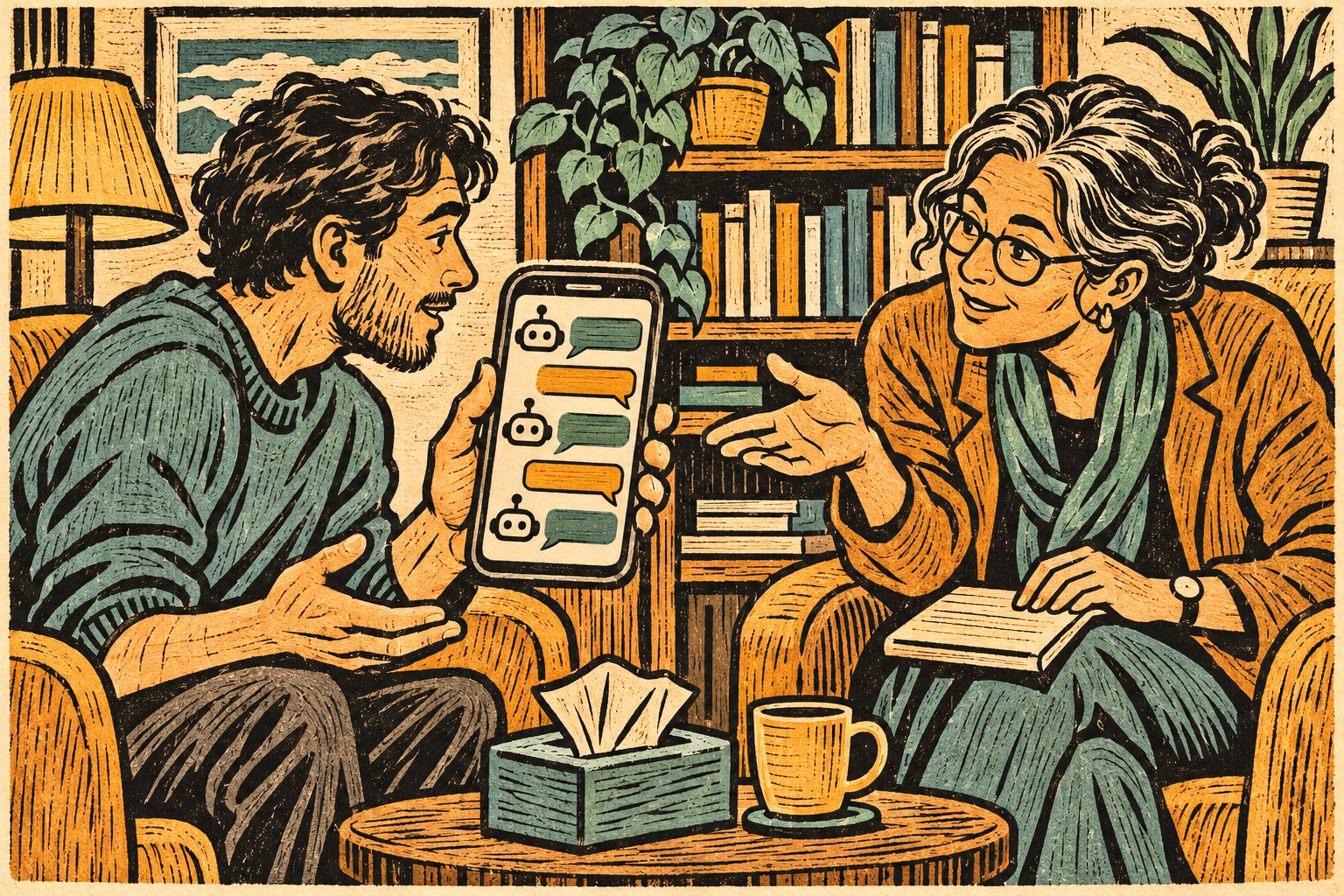 Illustration: TherapyTech What the author argues: GoodTherapy's editorial team argues that research doesn't show ChatGPT can replace therapy, and that when clients lean on AI chatbots, therapists should explore what role the tool plays in their lives rather than dismiss it. Key points: - In a 2025 trial with 210 adults, Therabot, a chatbot built for mental-health treatment, cut symptoms more than a waitlist over 4 weeks, but wasn't tested against human therapists.
- A 2026 meta-analysis, which pooled results from 39 trials, found small drops in depression and anxiety with chatbots, though 35 of those studies carried a high risk of bias.
- The team suggests 5 questions for clients, starting with what they hoped AI would give them, how the reply felt, and what they did with the advice.
- A self-selected GoodTherapy LinkedIn poll found 44% thought research should focus most on AI's impact on human connection, versus 35% on clinical safety and 12% on lasting symptom relief.
| Why this matters: Clients are already bringing chatbot advice, reassurance and self-diagnoses into the room, and a flat answer that AI isn't therapy can shut down a useful conversation. Treating those exchanges as clinical material lets you see which needs AI is meeting, and what it may be quietly replacing, without having to master every new tool. |
Read original story |


Leave a Reply