AI THERAPY  | Seeds of Science
By Josh Lipson, PhD, clinical psychologist, Emory postdoctoral fellow |
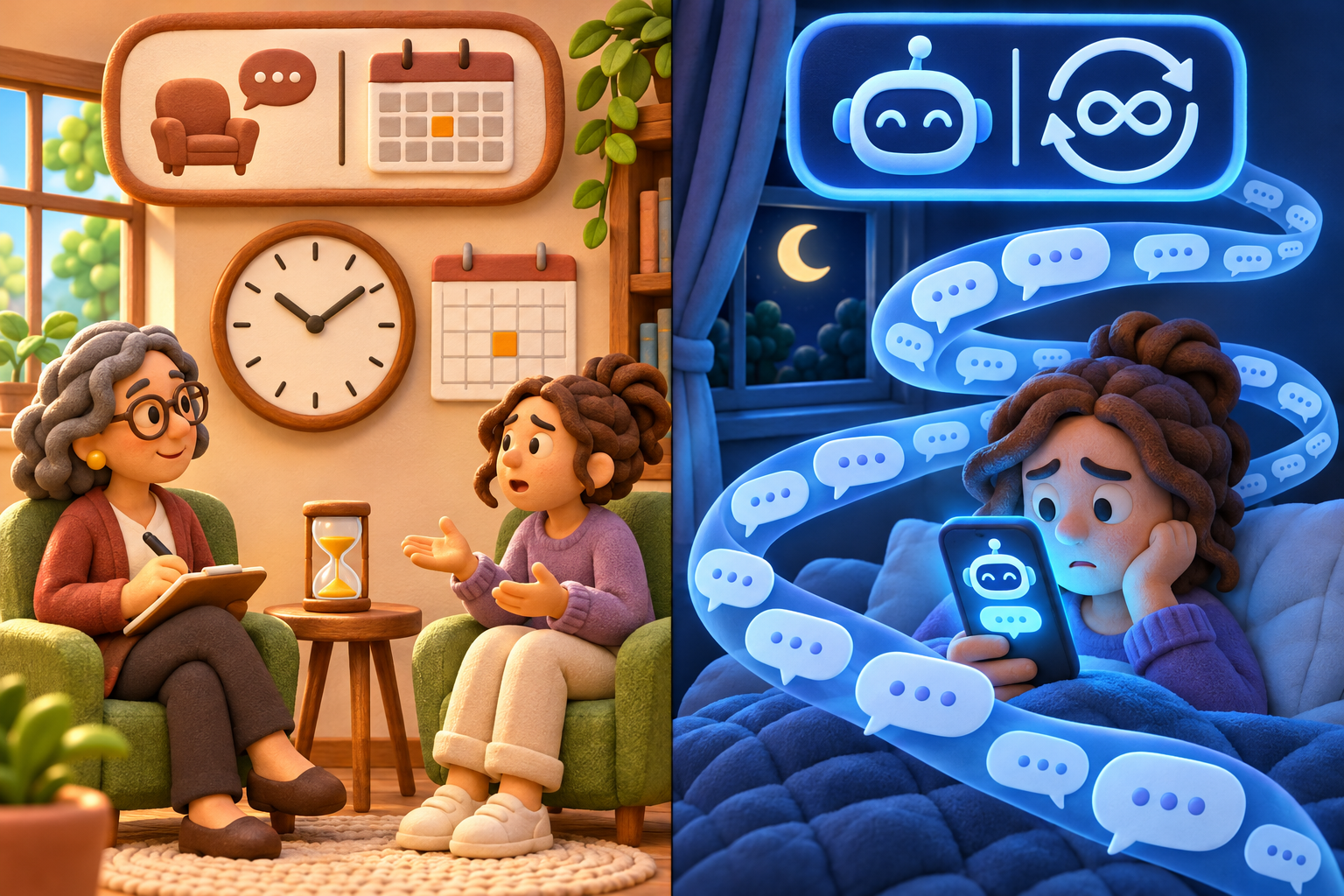 Illustration: TherapyTech What the author argues: Clinical psychologist Josh Lipson, a postdoctoral fellow at Emory's Center for Psychedelics and Spirituality, argues that even a flawless AI therapist would run into serious trouble at scale for one structural reason: it's too available, erasing therapy's time-bound frame. Key points: - Lipson says weekly 45- or 50-minute sessions leave clients time to digest insights and practice skills between visits, a rhythm he calls psychotherapy's "basic structural genius."
- For anxious clients, he warns, round-the-clock chatbot reassurance may become the quickest reinforcement loop ever built, lowering distress tolerance and pushing people away from messier real relationships.
- He concedes that for people who couldn't otherwise afford or reach therapy, chatbot support may beat nothing at all, with unlimited ChatGPT text queries costing $20 a month.
- He doubts AI companies will limit use or that regulation will work, though he speculates Uber-style price hikes could someday make AI therapy feel costly and finite.
| Why this matters: Lipson's argument suggests that how often clients lean on a chatbot, and for what, may matter as much as the quality of its replies, especially for anxious clients who seek reassurance. It also recasts session limits and a therapist's finite time as part of the treatment itself, not a flaw technology will eventually fix. |
Read original story | 

Leave a Reply