News at the Intersection of Mental Health and Technology
Meta settlement brings new youth-safety rules
MONDAY, AUGUST 31, 2026 • A 2-MINUTE READ
TherapyTech
DAILY
News at the Intersection of Mental Health and Technology
Good morning.
This edition covers a major Meta settlement over youth mental health, VR therapy for schizophrenia, and a hand-movement test being developed for early dementia-risk detection.
What happened: Washington’s attorney general announced a $17.1 billion multistate settlement with Meta over allegations involving child safety and privacy on Facebook and Instagram. The state says it will receive $237 million guaranteed over ten years. A syndicated report cited different figures ($18 billion and $227 million); this edition uses the attorney general’s figures and links both accounts.
Key points:
The lawsuit claimed Meta knew underage children were on its platforms and designed features that were addictive and mentally damaging.
The settlement requires Meta to limit screen time for children, curb push notifications during school hours, and improve age verification.
Why this is important: According to Washington's Attorney General, the settlement compels Meta to adopt safety measures it previously called impossible. The outcome could set a precedent and provides significant funding for youth mental health programs.
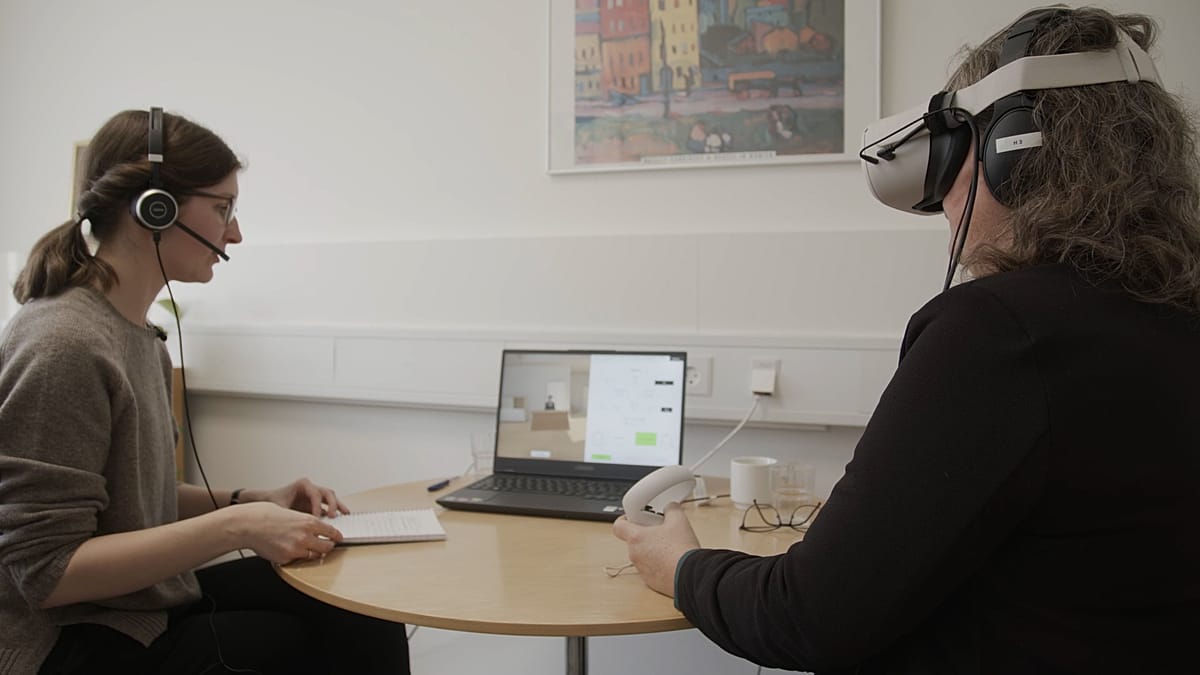
What happened: A clinical trial by Copenhagen's VIRTU Research Group found that VR therapy significantly reduced symptoms for people with schizophrenia. Patients confront an avatar representing their auditory hallucinations, Euronews reports.
Key points:
The trial, published in The Lancet Psychiatry, included 270 people with schizophrenia-spectrum disorders and persistent auditory hallucinations.
The therapy reduced hallucination severity at 12 weeks and frequency at both 12 and 24 weeks compared to a control group.
Why this is important: The research suggests externalizing symptoms in a controlled VR environment can give patients greater control, offering a new therapeutic model for severe psychiatric conditions. Researchers are now exploring AI integration to help scale these interventions.
What happened: Researchers at the University of Tasmania developed an AI platform that analyzes hand movements to detect dementia risk up to two decades before cognitive symptoms appear, according to press agency reporting.
Key points:
The two-minute test, called TAS Test, involves a user tapping their finger and thumb together for AI analysis.
Since 2019, the project has collected data from over 6,000 participants and could be publicly available by 2027.
Why this is important: This accessible, remote screening tool could enable earlier detection of dementia risk, allowing individuals to make preventative lifestyle changes. Its use of universal hand movements may overcome cultural and language barriers.
According to PE Hub, private equity firms are increasingly targeting patient engagement technology, driven by provider adoption of new software such as agentic AI. The report cites Flexpoint Ford's sale of ArtesRx, a behavioral health pharmacy, to Linden Capital Partners as an example of scaling opportunities in the sector.
News at the Intersection of Mental Health and Technology
DAILY
Archive edition assembled in September 2026 from saved reporting; coverage cutoff 6 a.m. Eastern on 2026-08-31. Featured-image illustration generated with AI.










Leave a Reply